General Merchandise Liquidation Pallets: The Everything Load
Mixed GM pallets and overstock loads packed with household goods, toys, tools, decor, and more. The backbone inventory of bin stores and flea market tables.
Shop Mixed MerchandiseGeneral merchandise liquidation pallets are mixed loads of non-food retail goods: think housewares, toys, party supplies, pet items, decor, small tools, health and beauty, seasonal stock, and everything in between, packed onto one pallet. A typical GM load carries 100 to 400 items and sells for $400 to $900, which lands most buyers between $1.50 and $5.00 per item. Condition ranges from customer returns to pure overstock, and the load type is listed on every product page.
GM is the workhorse category of the resale world because variety sells itself: a table of fifty different items attracts more buyers than fifty of the same thing. Browse our mixed merchandise pallets for return-based loads and our overstock loads for brand-new surplus goods. This page explains what GM loads contain, why bin stores are built on them, realistic item counts, and a sorting workflow that gets a pallet from the truck to the sales floor fast. All loads ship from Houston, TX.
- What counts as a general merchandise load?
- Why do bin stores run on general merchandise liquidation pallets?
- How many items come in a GM pallet?
- What is the best sorting workflow after delivery?
- Who should buy GM instead of a single-category load?
- How do I order GM pallets from Pallets Depots USA?
- What mistakes should first-time GM buyers avoid?
- FAQ
What counts as a general merchandise load?
GM is the industry's catch-all bucket for retail goods that do not fit a single category. When a distribution center processes returns and surplus, single-category product gets pulled into electronics, apparel, or tool loads, and the enormous remainder becomes general merchandise. That remainder is a snapshot of an entire store aisle by aisle.
Inside a typical GM pallet you might find kitchen gadgets next to phone cases, board games next to bathroom fixtures, dog toys next to office supplies. The randomness is the product. These loads come from major retailer supply chains and liquidation channels, so the labels you see are the labels those stores stock.
Two flavors matter when buying. Return-based GM (our mixed merchandise pallets) prices lowest because condition varies item by item. Overstock GM is unsold new inventory, often case-packed with multiples of each SKU, and costs more per piece because virtually everything is sellable out of the box. Overstock suits sellers who want listings with quantity; returns suit sellers hunting the lowest possible cost per item. Many operations buy both and blend them on the floor.
Why do bin stores run on general merchandise liquidation pallets?
The bin-store model is simple: fill bins with mixed items, charge one price per item, and drop that price daily until restock day. The model only works with an inventory source that is cheap, abundant, and endlessly varied, and GM loads are the only supply that checks all three boxes week after week.
The math explains the addiction. A bin store paying $2 per item on average and charging $10 on opening day can afford deep markdowns all week and still clear margin on the blended sale price. Variety drives the treasure-hunt psychology that keeps customers returning every restock, and a GM pallet delivers hundreds of different SKUs without any curation work by the store.
There is a sustainability angle too: every returned item resold through a bin or flea market table is an item that never reaches a landfill. The EPA's materials reuse resources at EPA.gov outline why extending product life through resale matters. Bin stores burning through 20 to 40 pallets weekly should also compare per-pallet pricing against bulk rates; our wholesale pallets by the truckload page shows how the numbers change at volume.
Ready to flip your first load? General merchandise liquidation pallets ship from our Houston warehouse within 2 business days.
Shop Mixed MerchandiseHow many items come in a GM pallet?
Item count swings with the size and weight of what got packed. Here are the ranges we see most often:
| GM load style | Typical item count | Typical price | Approx. cost per item |
|---|---|---|---|
| Small-item heavy (beauty, toys, accessories) | 250 to 400 | $450 to $700 | $1.30 to $2.50 |
| Balanced mix | 150 to 250 | $400 to $800 | $2.00 to $4.00 |
| Bulky-item heavy (furniture, appliances, decor) | 40 to 120 | $500 to $900 | $5.00 to $12.00 |
| Overstock case packs | 100 to 300 | $600 to $1,000 | $2.50 to $6.00 |
Counts are estimates unless a load is manifested. When a manifest is available, it lists items, quantities, and retail values, and reading one correctly is a skill worth twenty minutes of study; our walkthrough on reading a liquidation manifest covers the traps, like inflated retail values and duplicate lines. Unmanifested GM trades that certainty for a lower price, which is often the right trade for bin-style selling where every item gets the same tag anyway.
What is the best sorting workflow after delivery?
A GM pallet rewards a disciplined first hour. Before cutting the shrink wrap, photograph all four sides for your records. Then stage four zones: premium, standard, bulk, and salvage.
- Break down top to bottom. Heavier goods usually ride low, so clear layers in order and watch for crushed boxes worth noting.
- Triage in one touch. Anything with strong brand recognition or a $25+ resale value goes to premium for individual listing. Everyday sellable goods go to standard. Incomplete or shopworn items go to bulk. True junk goes to salvage.
- Count as you go. A tally by zone gives you an instant recovery forecast and a record to compare against future loads.
- Shelve premium immediately. Your top 10 to 20 percent of items typically returns half or more of the pallet cost, so list them the same week.
Standard-zone goods flow to bins, market tables, or lot bundles. Bulk moves in box lots to other sellers. Expect two to four hours per pallet once the routine is muscle memory, and keep gloves and box cutters staged where the truck unloads.
Who should buy GM instead of a single-category load?
Choose general merchandise when your selling channel rewards variety over specialization. Flea market vendors, discount store owners, live-auction sellers, and anyone running bins gets more traction from three hundred different items than from a focused load of one product type. GM also flattens category risk: a soft month for toys barely dents a pallet that is only ten percent toys.
Specialists should look elsewhere. If your audience follows you for sneakers or refurbished tech, a mixed pallet dilutes your feed and your labor. And sellers optimizing purely for revenue per hour sometimes prefer fewer, higher-value items over the volume game GM demands.
Budget-wise, general merchandise liquidation pallets are one of the most forgiving starting points in this business: entry prices sit near the bottom of the market, no single item failure can sink the load, and the sheer count gives beginners hundreds of low-stakes pricing reps. Scale is straightforward too. Start with one pallet, and when weekly demand outruns it, our guide comparing a truckload versus a single pallet shows exactly when the jump to 24 to 26 pallets pays for itself.
How do I order GM pallets from Pallets Depots USA?
Every available load is listed with its condition type, source channel, and price in our online shop, open for orders 24/7. Mixed merchandise and overstock inventory rotates as trucks arrive at the warehouse, so the selection you see today is genuinely what is on the floor in Houston.
Shipping is by LTL freight to the lower 48 states, with liftgate options for residential delivery. Buyers in the Greater Houston area can arrange pickup by appointment at 1918 Collingsworth St, Houston, TX 77009 and save the freight line entirely. Most freight deliveries arrive within a week of dispatch.
Not sure whether returns-based mixed merchandise or overstock case packs fit your operation better? That is a two-minute phone conversation. Call +1 (254) 629-7936 or email info@palletsdepotsusa.com with your selling channel and budget, and we will point you at the load type that matches. First-time buyers get the same straight answers as truckload accounts.
What mistakes should first-time GM buyers avoid?
The GM learning curve is short, but a handful of rookie errors repeat so often they are worth naming.
Overbuying before you can process is the big one. Two pallets of mixed goods is several hundred items, and unsorted inventory clogs garages, kills motivation, and ties up cash. Master the intake-to-sale cycle on a single load before adding volume.
Valuing a load at manifest retail is the second trap. A manifest that shows $4,000 in retail value does not mean $4,000 is coming to you; recovery on mixed goods is a fraction of retail, which is precisely why the pallet costs hundreds instead of thousands. Build your projections from realistic resale prices in your own channel.
Underestimating the storage footprint comes third. A broken-down GM pallet expands to fill tables, shelves, and floor space you did not plan for, so measure your work area before the freight truck is scheduled.
Last, keep records from load one. A simple sheet with landed cost, recovery, and hours per pallet turns your second purchase into a data-driven decision instead of another guess, and that habit separates hobby buyers from operators within a few months.
In stock right now
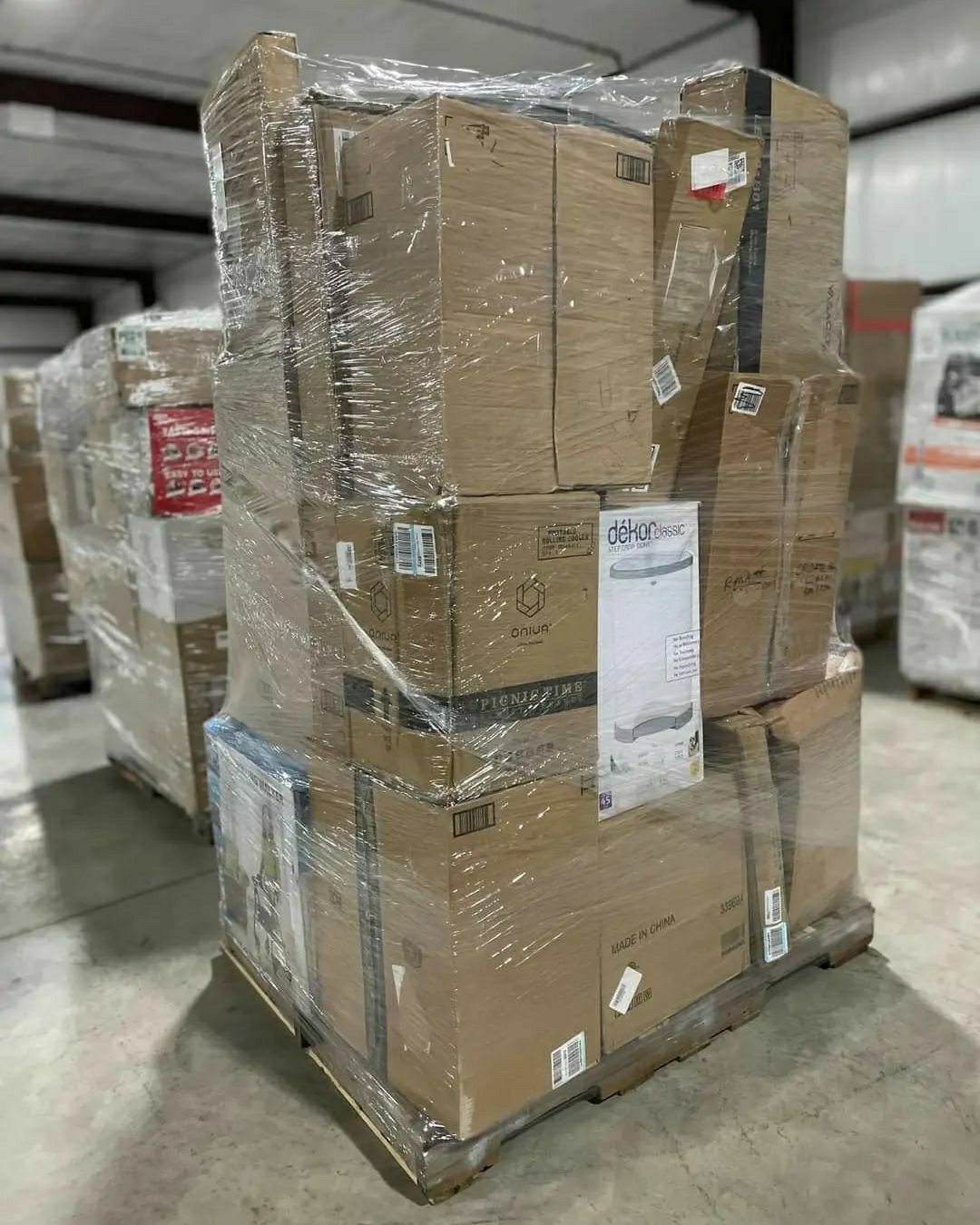
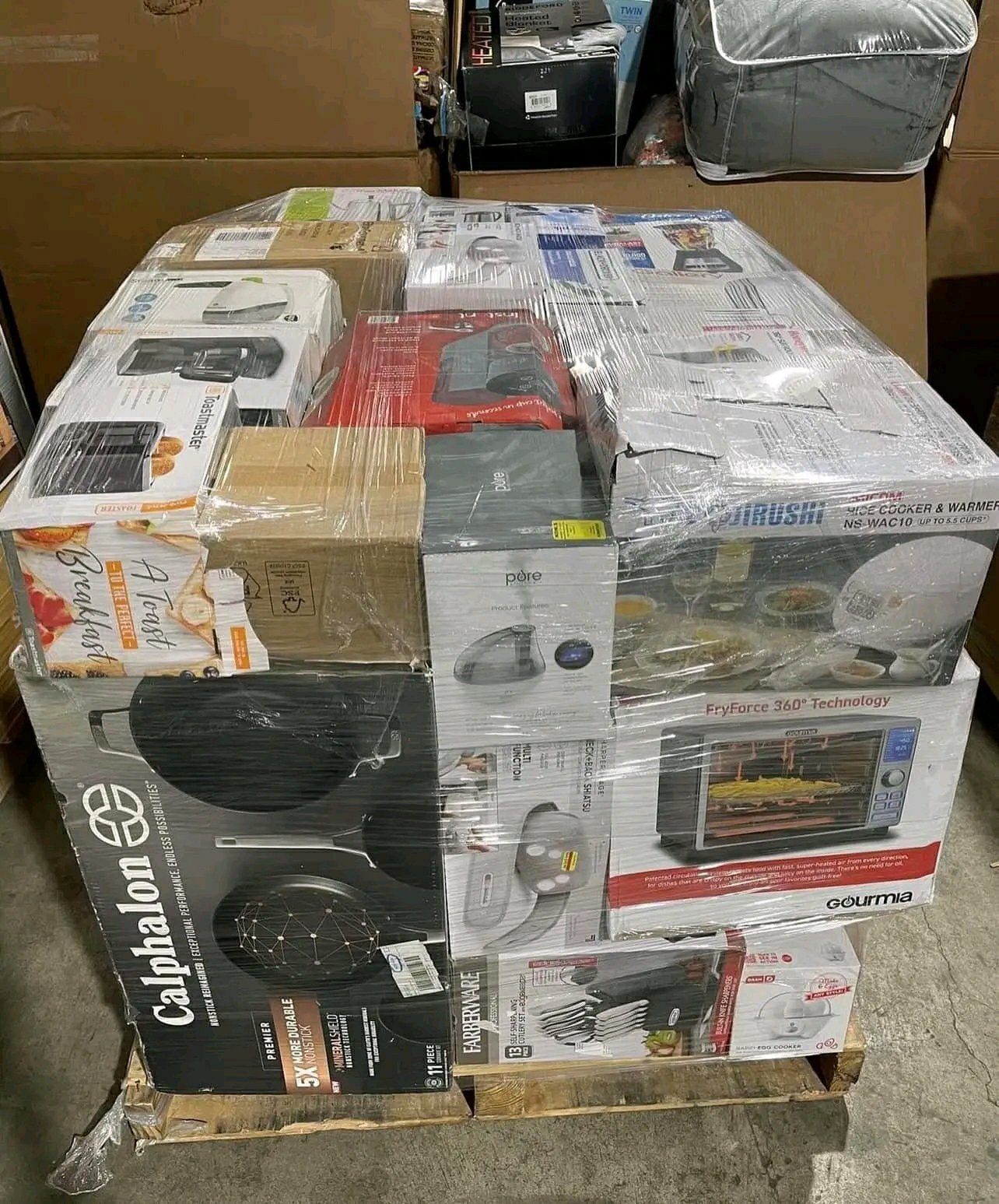
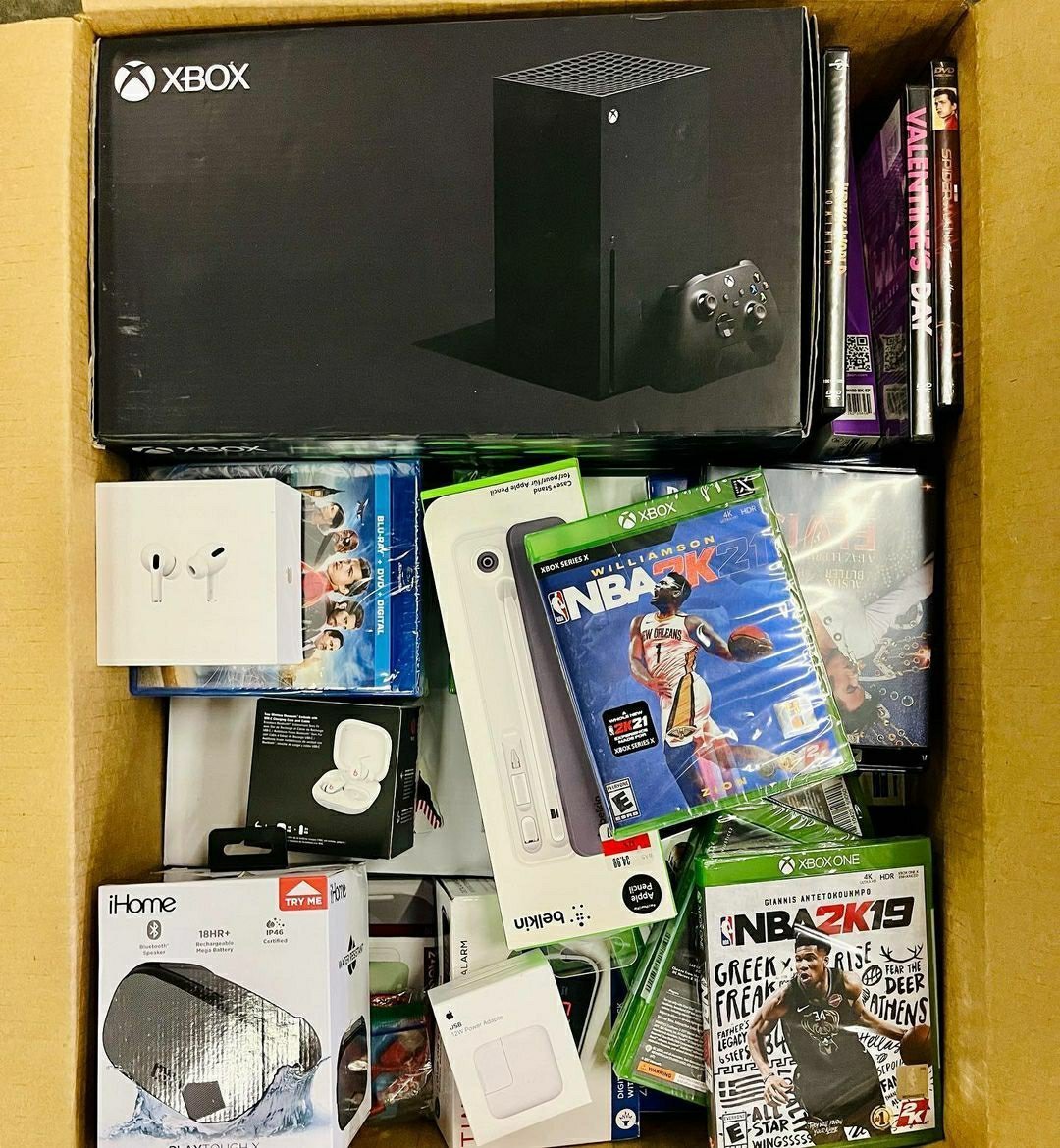
Browse all 130+ pallets and truckloads in the shop →
Frequently asked questions
What items are in a general merchandise pallet?
Expect a broad retail mix: housewares, toys, health and beauty, pet supplies, decor, small tools, electronics accessories, office goods, and seasonal items. Contents vary load to load because GM is built from whatever a retail channel processed that week. Manifested loads list contents; unmanifested loads are a priced-in surprise.
Are GM pallets good for beginners?
Yes, they are one of the most common first purchases. Entry prices are low, the variety teaches you what sells in your market, and no single damaged item ruins the load. The main demand is time: a few hundred mixed items take several hours to sort, price, and stage.
What is the difference between mixed merchandise and overstock loads?
Mixed merchandise pallets are built from customer returns, so condition varies item by item and prices run lowest. Overstock loads are brand-new unsold inventory, often with case-pack multiples of each product, priced higher because nearly every piece is retail-ready. Returns maximize item count per dollar; overstock maximizes sellable rate.
How much does a GM pallet cost with shipping included?
Most general merchandise pallets run $400 to $900, and LTL freight adds roughly $150 to $350 depending on distance and delivery type. A realistic all-in budget for a first load is $600 to $1,200. Local pickup in Houston by appointment removes the freight cost completely.
Can bin stores get recurring weekly supply?
Yes. We support repeat buyers with rotating mixed merchandise and overstock inventory, and high-volume operations can move to truckload supply of 24 to 26 pallets for the lowest per-unit cost. Call +1 (254) 629-7936 to set up a recurring arrangement matched to your restock schedule.
Fill Your Bins, Tables, and Shelves
Mixed merchandise and overstock pallets with the variety your customers dig for, shipped nationwide from Houston, TX. Pick this week's loads before they rotate.
Shop GM Pallets NowQuestions? Call +1 (254) 629-7936 or email info@palletsdepotsusa.com