Home Depot Liquidation Pallets: Tool Return Loads That Hold Their Value
Power tools, hand tools, hardware, and fixtures from big-box home improvement return channels. We are an independent liquidator, and the deals are real.
Shop Tool Return PalletsHome Depot liquidation pallets, as the term is used across the resale industry, are return and overstock loads that originate from big-box home improvement retail channels: power tools, hand tools, hardware, plumbing and electrical fixtures, lighting, and lawn equipment. To be clear about what you are buying: Pallets Depots USA is an independent liquidation company. We are not an official partner, affiliate, or authorized reseller of Home Depot or any retailer. "Home Depot style" describes where the goods entered the returns stream, not a corporate relationship, and any seller claiming an official pipeline deserves scrutiny.
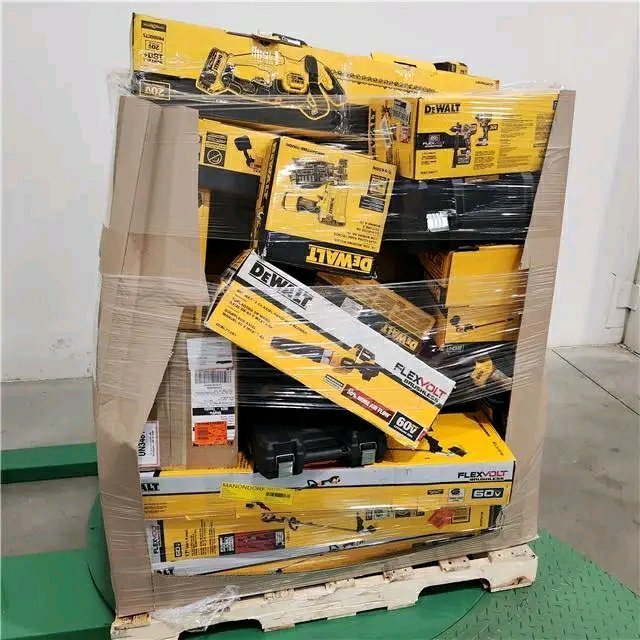
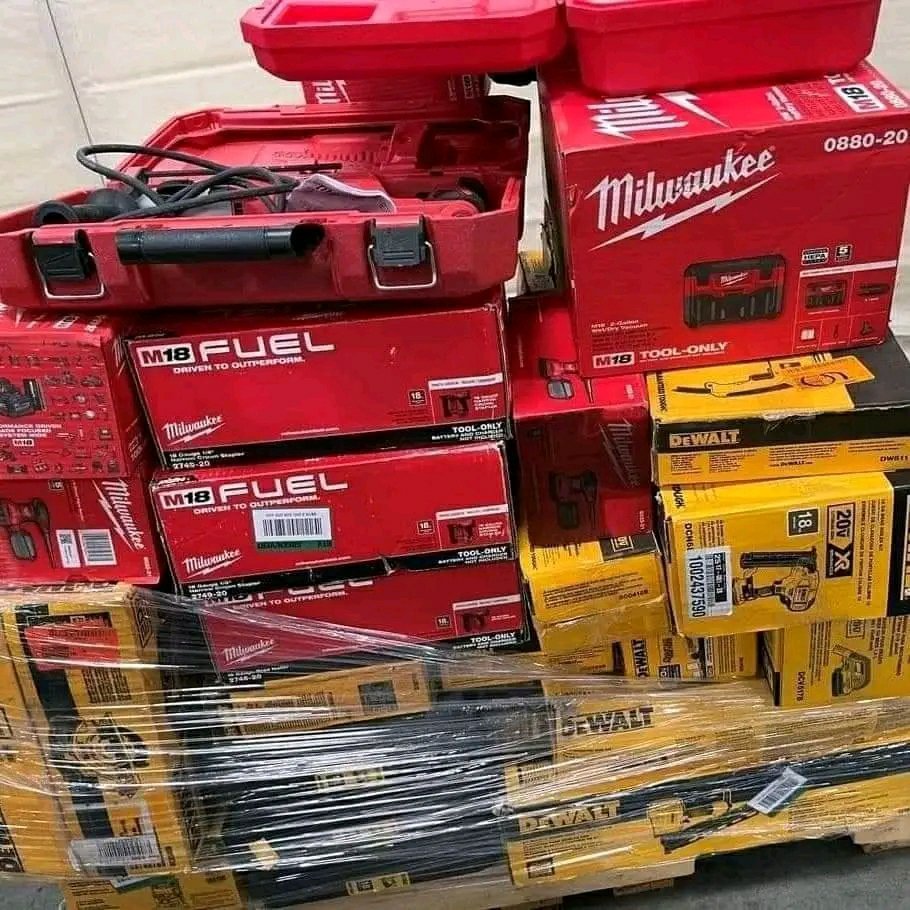
These loads live in our tool return pallets category, with 15 active listings priced for reseller margin. Tool loads typically run $600 to $1,500 per pallet and carry 30 to 100 items dominated by name brands, because home improvement retail is a name-brand business. Below: what the loads contain, why tools out-hold nearly every other liquidation category on resale value, and how to inspect a pallet like a pro on delivery day.
- What is really inside a tool and home improvement return load?
- What does "Home Depot style" mean, and are you affiliated with Home Depot?
- Why do tools hold resale value better than other categories?
- How much do home depot liquidation pallets cost?
- How should I inspect a tool pallet when it arrives?
- Where do tool flippers actually sell their inventory?
- Can I scale from single tool pallets to truckloads?
- FAQ
What is really inside a tool and home improvement return load?
Picture the returns desk at a big-box hardware store on a Saturday. Drills that got duplicated as gifts. A miter saw bought for one weekend project. Faucets in opened boxes that did not match the vanity. Light fixtures a contractor over-ordered. That stream, consolidated and palletized, is the raw material of every tool return load on the market.
A representative pallet blends several buckets: cordless power tools and their batteries, corded saws and sanders, hand tool sets, fasteners and hardware by the case, plumbing fittings, ceiling fans and lighting, paint sprayers, and the occasional outdoor item like a string trimmer or pressure washer. Brands skew toward the names that dominate home improvement shelves, which is precisely why resale demand stays deep.
Condition follows the returns-load pattern: a strong share of items are complete and functional (wrong size, duplicate gift, abandoned project), a middle band has missing accessories or cosmetic scuffs, and a tail is genuinely broken or incomplete. Per-product listings state whether a load is manifested or unmanifested, and adjacent categories like our kitchen appliances pallets often appeal to the same buyer base.
What does "Home Depot style" mean, and are you affiliated with Home Depot?
No, and neither is any legitimate liquidator selling to the public. In this industry, retailer names function as shorthand for a goods profile: "Home Depot style" tells a buyer to expect tools, hardware, and building products from big-box home improvement return programs, the same way "Amazon returns" signals mixed e-commerce goods. The merchandise is authentic product that flowed through those retail channels; the naming describes origin, not partnership.
This distinction protects you as a buyer. Scam operations love to flash "official Home Depot contract" claims to manufacture false trust, then vanish after the wire transfer clears. Real liquidators say plainly what we say here: goods are sourced from major retailer supply chains and liquidation channels, condition is disclosed per load, and no brand endorsement exists. The Federal Trade Commission publishes guidance on evaluating business claims and avoiding wholesale scams at FTC.gov, worth ten minutes before your first bulk purchase from anyone.
Judge a supplier on verifiable facts: a physical warehouse you can visit, a phone that answers, card payment options, and condition language that matches what arrives. Our warehouse is in Houston, TX, and visits are welcome by appointment.
Ready to flip your first load? Home depot liquidation pallets ship from our Houston warehouse within 2 business days.
Shop Tool Return PalletsWhy do tools hold resale value better than other categories?
Tools are the rare liquidation category where the product does not age out. A smart speaker loses relevance in two years; a quality drill from five years ago still drills, and buyers know it. Several forces keep the floor high:
- Utility never expires. Tools are bought to do a job, and the job does not care about model years.
- Brand loyalty runs deep. Tradespeople stay inside their battery platform for years, creating constant demand for bare tools and batteries.
- Retail prices anchor high. When a tool sells new for $199, a clean returned unit at $110 looks like an obvious win to the buyer.
- The buyer pool is huge. Contractors, handymen, DIY homeowners, and hobby builders all shop used without hesitation.
- Even broken units sell. Motors, batteries, chargers, and cases have steady parts demand.
The practical result: tool loads recover a higher share of retail value than most categories, and resellers commonly target 2x to 3x of pallet cost with strong sell-through rates. For a deeper walkthrough of grading and pricing tool loads, our tool pallets guide goes model by model.
How much do home depot liquidation pallets cost?
Tool loads price above general merchandise because per-item values are higher and demand is proven. Typical ranges:
| Load profile | Typical price | Typical count | Best suited for |
|---|---|---|---|
| Mixed hardware and fixtures | $600 to $900 | 60 to 100 | Flea market and swap meet sellers |
| Mixed tool returns, unmanifested | $800 to $1,200 | 40 to 80 | Resellers comfortable testing |
| Power tool heavy, manifested | $1,200 to $1,500 | 30 to 60 | eBay and Marketplace flippers |
| Truckload (24 to 26 pallets) | Quoted per load | 1,000+ | Stores and high-volume operations |
Add $150 to $350 freight for most destinations, since tool pallets ship heavy. Compare current tool listings against every other category in our full pallets catalog to see the premium in context: you pay more per item than GM, and you get items that individually sell for $30 to $200 instead of $5 to $15.
How should I inspect a tool pallet when it arrives?
Delivery-day discipline saves money twice: once on freight claims, once on resale accuracy. Before the driver leaves, walk around the pallet and note any crushed corners, broken wrap, or visible damage on the delivery receipt. Photograph everything wrapped, then unwrapped, so you have a record if a claim becomes necessary.
Then inspect in passes rather than randomly. Pass one is a visual sort: separate items into complete-in-box, opened-but-complete, missing pieces, and visibly damaged. Pass two is functional: batteries on chargers first (they take time), then trigger-test power tools, check chucks and guards, spin blades by hand for wobble, and thread-check plumbing fittings. Pass three is detail work: verify model numbers against the manifest if one came with the load, confirm batteries and chargers pair with their tools, and inventory loose hardware into bins.
Budget an afternoon per pallet and keep a multimeter, a battery charger for the major platforms, and safety glasses at the inspection table. Log every unit in a simple spreadsheet with condition and target price, and any discrepancy questions on a manifested load can go straight to our team through the contact page within a couple of business days of delivery.
Where do tool flippers actually sell their inventory?
Facebook Marketplace is the workhorse channel for tools, because the buyer is local, pays cash, and takes heavy items off your hands without shipping costs. Clean cordless kits and popular saws often move within days at 50 to 65 percent of retail. eBay wins for anything collectible, discontinued, or parts-only, and for reaching tradespeople hunting a specific model.
In-person channels deserve respect here more than in any other category. A table of drills and fixture boxes at a swap meet draws contractors who buy in multiples, and repeat trade customers will start asking what is coming on your next pallet. Some flippers build entire businesses supplying small crews at steady discounts.
Two selling tips that raise recovery: sell bare tools and batteries as separate listings when a combo is incomplete, since platform loyalists need both independently, and always list the model number in the title because tool buyers search by model, not by adjectives. When you are ready to put this to work, current tool return inventory is live in the shop, and loads rotate as new freight lands in Houston.
Can I scale from single tool pallets to truckloads?
Tool flipping scales cleanly because demand rarely caps out at the local level. Once your recovery numbers hold steady across three or four single pallets, the next cost break comes from ordering multiple pallets on one freight bill, and the one after that comes from full truckloads of 24 to 26 pallets at our best per-unit pricing.
Volume changes the operation before it changes the profit. A truckload needs a dock or forklift to unload, several hundred square feet of staging space, and a selling system that moves inventory weekly rather than whenever you feel like listing. Buyers who make the jump successfully usually have a booth, a store, or a wholesale customer list already absorbing goods on a schedule.
A middle path many tool sellers take: split a truckload with one or two other resellers in your area. Everyone gets truckload pricing, nobody drowns in inventory, and the freight cost divides three ways. However you structure it, grow off your own numbers: when demand from your buyers consistently outruns the pallets you bring in, the scale decision has already made itself.
In stock right now
Browse all 130+ pallets and truckloads in the shop →
Frequently asked questions
Are these pallets bought directly from Home Depot?
We are an independent liquidator with no partnership, affiliation, or authorization from Home Depot. Loads described as Home Depot style are tool and home improvement returns that originated in big-box retail return channels and reached us through liquidation supply chains. The merchandise is genuine; the retailer name describes the goods profile only.
Do tool return pallets include batteries and chargers?
Often, but not always paired. Returns get consolidated by processors, so a cordless tool may arrive as a bare unit while batteries and chargers appear elsewhere in the load. Experienced flippers list bare tools, batteries, and chargers separately, since all three sell independently to buyers already committed to a platform.
What percentage of tools in a return load actually work?
Every load varies, but tool returns tend to run stronger than general electronics because many items come back for non-defect reasons like duplicates or finished projects. A common planning assumption is that most units are functional or need only minor parts, with a smaller tail that becomes parts inventory.
Is a tool pallet a good choice for a first-time buyer?
It is one of the better first categories if you can lift heavy items and do basic function testing. Per-item values are high, demand is steady, and grading is straightforward. The tradeoffs are a higher entry price than clothing or GM loads and freight costs that reflect the weight.
Can I pick up a tool pallet instead of paying freight?
Yes. Local pickup is available by appointment at our warehouse, 1918 Collingsworth St, Houston, TX 77009. Tool pallets are heavy, so bring a truck or trailer rated for the load. Call +1 (254) 629-7936 to schedule a time and confirm the pallet weight beforehand.
Buy the Category That Keeps Its Value
Tool return pallets from big-box home improvement channels, honestly described and priced for margin. Order online or book a Houston pickup today.
Shop Tool Return PalletsQuestions? Call +1 (254) 629-7936 or email info@palletsdepotsusa.com